
Table of Contents
Ensuring Playground Safety in Massachusetts
Every year, thousands of children experience playground-related injuries, many preventable through proactive measures. In Massachusetts, a playground safety inspection in Massachusetts is crucial to safeguard young ones in public parks, schools, and neighborhoods. We at Versacor Enterprises understand how vital these safe play spaces are, drawing on our experience since 1987 to help communities avoid hazards.
Playground safety inspections systematically identify risks like falls from heights, entrapment in equipment, or improper surfacing that could lead to serious harm. Massachusetts regulations align with federal guidelines, mandating compliant play area evaluations to ensure environments meet safety benchmarks. Certified professionals, listed in directories like those from the National Program for Playground and Recreation Safety, conduct these assessments; studies show certified inspections reduce injury rates by up to 50% compared to non-certified ones. We follow the ASTM playground inspection checklist from ASTM F1487 and CPSC playground safety standards for thorough Massachusetts playground hazard assessments, recommending monthly visual checks, annual comprehensive reviews, and post-installation verifications.
Our team offers free initial assessments and 24/7 support for urgent needs, including outdoor installation services. Discover more about key regulations in the next section.
Key Standards for Playground Safety Inspections
When it comes to playground safety inspection in Massachusetts, adhering to established standards is essential to protect children in public parks, schools, and residential areas. At Versacor Enterprises, we’ve helped numerous communities navigate these requirements, ensuring safe play environments through our expertise in installations and upkeep. Key guidelines from ASTM and CPSC form the backbone of these inspections, focusing on equipment integrity and hazard prevention to minimize injury risks.
ASTM F1487 Guidelines in Massachusetts
ASTM F1487 is the leading standard for playground equipment design and safety, updated in the F1487-21 revision to incorporate the latest research on injury prevention. Developed by the American Society for Testing and Materials, it provides a comprehensive framework for manufacturers and inspectors to evaluate structural soundness and usability. The National Program for Playground Safety endorses this standard as a core tool for creating accessible, durable play spaces.
Key elements of the ASTM playground inspection checklist include thorough structural checks for rust or instability in frames, hardware inspections to ensure secure bolts and moving parts, and verification of age-appropriate equipment like toddler swings versus older child climbers. Inspectors must also assess for sharp edges, pinch points, and proper spacing between elements to prevent collisions. These protocols, drawn from NPPAS’s S.A.F.E. initiative, emphasize proactive hazard identification during routine audits.
In Massachusetts, ASTM F1487 integrates seamlessly into state building codes for public and commercial playgrounds, requiring compliance for new installations in places like coastal towns where weather accelerates wear. We’ve seen how applying these guidelines during site assessments prevents common issues, such as weakened supports from salt air exposure, ensuring long-term safety for local kids.
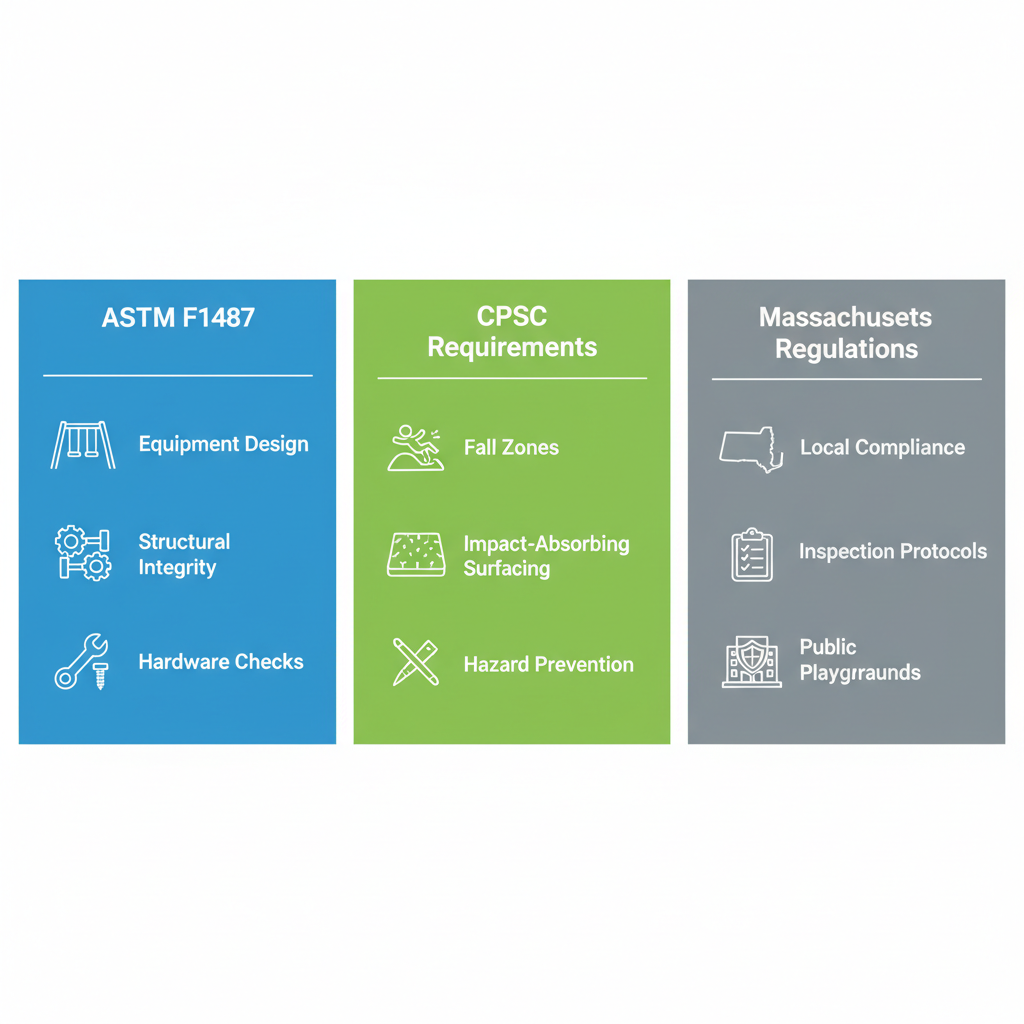
Visual guide to essential playground safety inspection standards in Massachusetts
This infographic simplifies the integration of federal guidelines, helping families and facility managers visualize compliance steps. Moving forward, understanding CPSC protocols builds on these foundations for even stronger protections.
CPSC Requirements for Fall Zones and Surfacing
The Consumer Product Safety Commission (CPSC) sets forth detailed requirements in its Public Playground Safety Handbook to address common injury sources, particularly falls, which account for over 50% of playground incidents according to NPPAS research. These federal safety protocols for playgrounds outline protocols for designing critical zones to absorb impacts and maintain clear spaces around equipment.
Core CPSC playground safety standards focus on fall height limits up to 8 feet for most equipment, mandating impact-absorbing surfacing like engineered wood fiber at depths of 12 inches for critical fall zones extending 6 feet in all directions. Inspectors check for entanglement hazards, such as loose ropes or projecting parts, and ensure clearances prevent head entrapments. The handbook’s checklists also cover maintenance of loose-fill materials to avoid compression over time.
Massachusetts adopts these CPSC guidelines through its Department of Early Education and Care regulations for licensed facilities, applying them rigorously to municipal parks and daycares. For instance, in urban Boston areas, we’ve recommended upgraded surfacing to meet these depths, reducing injury risks during high-traffic play hours and aligning with state oversight for safer community spaces.
Integrating Standards for Local Compliance
Integrating ASTM F1487 and CPSC requirements with Massachusetts-specific regulations creates a robust approach to MA-compliant play equipment audits, ensuring holistic safety across installations. This alignment involves certified inspectors trained via programs like those from NPPAS, who verify both equipment design and site conditions against state building codes that mirror federal benchmarks.
Key integration steps include cross-referencing ASTM’s structural checklist with CPSC’s surfacing protocols during annual inspections, documenting findings for regulatory audits. For World Klass/Wisdom Playground systems, which we install as authorized dealers, built-in features like tamper-resistant hardware and specified fall zones simplify compliance. Recommendations also cover ongoing playground maintenance services, such as free initial assessments to identify non-conformities early.
In Massachusetts, this unified framework supports local compliance for diverse settings, from schoolyards to residential backyards, by incorporating state mandates like barrier fencing around play areas. We’ve found that thorough documentation not only aids audits but also prevents costly rework, letting families focus on joyful play without worry.
Benefits of Regular Playground Inspections
Conducting a commercial playground installations project is just the start; maintaining safety is key to long-term enjoyment. At Versacor Enterprises, we emphasize the importance of playground safety inspection in Massachusetts to protect children and communities. Regular inspections uncover hidden risks before they cause harm, aligning with our commitment to Delivering Outdoor Dreams across the Northeast.
Injury Prevention and Risk Reduction
Routine play area safety checks play a vital role in safeguarding children from common hazards like falls from elevated platforms or equipment failures due to wear and tear. In Massachusetts playgrounds, where winter weather can exacerbate issues like cracking surfacing or rusted hardware, proactive inspections ensure surfaces remain cushioned and structures stable. By identifying tripping hazards such as exposed footings or protruding bolts early, these evaluations minimize the risk of serious accidents, fostering a secure environment for play.
According to the CPSC, over 200,000 playground-related injuries occur annually in the U.S., with falls accounting for most emergency room visits; proper surfacing alone can prevent up to 60% of head injuries by providing adequate impact absorption. The Public Playground Safety Checklist highlights that maintaining 12 inches of protective material, like mulch or rubber mats, extending six feet around equipment, dramatically reduces fall severity.
We at Versacor Enterprises offer certified inspections tailored to MA conditions, helping clients avoid these pitfalls with our experienced team’s thorough assessments. Our free initial evaluations make it easy to start building safer spaces.
Compliance and Liability Protection
Adhering to CPSC playground safety standards provides facility managers in Massachusetts with essential legal safeguards, reducing liability exposure from potential lawsuits. Documented inspections create a clear record of due diligence, demonstrating that playgrounds meet federal guidelines for guardrails, spacing, and hazard-free designs. This compliance not only avoids fines but also shields organizations from claims arising from preventable incidents, especially in public or school settings where oversight is scrutinized.
The CPSC guidelines, as outlined in their Public Playground Safety Checklist, mandate checks for safe openings in equipment to prevent entrapment and ensure platforms over 30 inches have protective barriers, directly tying to reduced injury risks and legal protections. Following these standards helps MA facilities align with ASTM protocols, offering evidence-based defense in audits or disputes.
Our team at Versacor conducts inspections to ensure full CPSC playground safety standards compliance, providing detailed reports that protect your operations. With Honest Estimates and our expertise since 1987, we help you navigate these requirements seamlessly.
Cost Savings Through Proactive Maintenance
Proactive hazard evaluations in MA yield significant financial benefits by catching issues early, preventing costly emergency repairs that can disrupt operations and inflate budgets. For instance, routine checks using the ASTM playground inspection checklist detect loose parts or deteriorating surfacing before they lead to major failures, extending the lifespan of equipment like World Klass systems by years. This approach shifts spending from reactive fixes to affordable upkeep, ultimately saving property owners and municipalities substantial amounts over time.
Studies show that early detection through inspections can cut repair costs by up to 50%, as small fixes like tightening hardware or replenishing mulch cost far less than full replacements after an incident. The CPSC emphasizes that regular maintenance avoids the high expenses of injury-related claims, with surfacing upkeep alone preserving equipment integrity against harsh New England winters.
Versacor Enterprises integrates these savings into our maintenance services, offering free assessments to identify efficiencies upfront. We are available 24/7 for urgent needs, ensuring your playground remains a wise investment while Request a Quote for tailored plans that deliver lasting value.
The Playground Inspection Process
At Versacor Enterprises, we understand the importance of a thorough playground safety inspection in Massachusetts to keep children safe during play. As authorized dealers and maintainers of World Klass playground systems, we follow strict guidelines to ensure every site meets high standards. Whether for schools, parks, or communities, our process delivers peace of mind through detailed checks aligned with industry best practices. Partnering with us for outdoor services versacor means accessing experienced teams trained in certified inspector protocols.
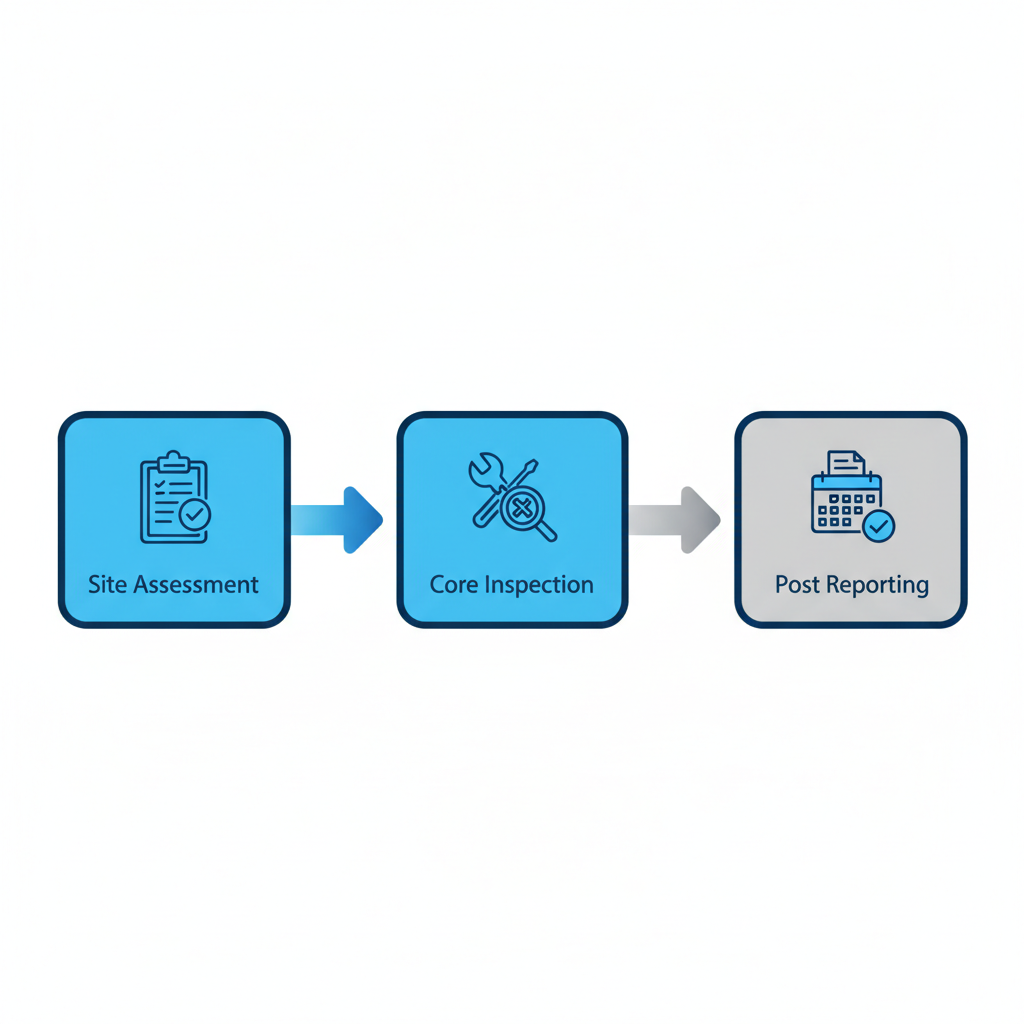
Versacor’s three-stage playground inspection process visualization
This visual outlines our step-by-step MA play safety audit, helping facility managers anticipate each phase from start to finish.
Pre-Inspection Preparation and Site Assessment
We begin every inspection by preparing the site meticulously, especially for Massachusetts playgrounds where weather can leave behind unique challenges like accumulated leaves or ice residue. First, clear all debris from the play area to ensure unobstructed access for evaluators. Gather essential records, including previous maintenance logs and installation certificates, to review compliance history.
Next, conduct an initial walk-through to assess the overall layout. This includes noting any obvious hazards, such as overgrown vegetation near equipment or uneven ground. For school year-end inspections in areas like Worcester, we recommend scheduling during off-peak times to minimize disruptions. Certified inspectors, trained through programs like those from the National Program for Playground Safety, emphasize documenting site conditions upfront to inform the detailed equipment compliance review ahead. This preparation phase sets a solid foundation, allowing us to focus on proactive safety measures without surprises.
By involving facility managers early, we foster collaboration and identify any immediate concerns, ensuring the assessment aligns with ASTM F1487 guidelines from the outset.
Conducting the Core Inspection
Once prepared, we dive into the hands-on core inspection, using a structured approach to verify every element. Follow these numbered steps for an effective ASTM playground inspection checklist:
- Perform visual scans of all equipment, checking for sharp edges, loose hardware, or signs of wear on swings, slides, and climbers.
- Measure fall zones and surfacing depths according to ASTM F1292 standards, ensuring protective materials like mulch or rubber tiles meet required thicknesses to cushion impacts.
- Test equipment stability by applying pressure to platforms and chains, confirming secure anchoring and no wobbling components.
We adhere to CPSC playground safety standards throughout, particularly for head entrapment risks and protruding hazards. In Massachusetts sites, this includes evaluating modular World Klass components for proper assembly and function. Our certified team, with specialized training in early childhood and community playground safety, uses tools like depth gauges and torque wrenches for precision. This detailed process uncovers potential issues early, preventing injuries and supporting long-term durability.
Post-Inspection Reporting and Follow-Up
After completing the checks, we compile a comprehensive report to guide next actions. This includes detailed photos of findings, a filled-out checklist, and prioritized recommendations for repairs, such as replacing worn surfacing or tightening fittings.
We present the documentation in an easy-to-understand format, highlighting urgent items first. For compliance in Massachusetts, our reports reference key CPSC handbook elements, like ongoing maintenance schedules, to help sites stay audit-ready.
Follow-up is crucial; we offer tailored maintenance planning, including seasonal check-ups. With our 24/7 availability, Versacor responds promptly to any immediate fixes needed post-inspection. This ensures playgrounds remain safe and enjoyable, with recommendations focused on recommended actions rather than overhauls. Facility managers appreciate our transparent approach, which builds trust and encourages proactive care for lasting safety.
Best Practices for Playground Safety
At Versacor Enterprises, we understand the importance of keeping playgrounds safe for children across Massachusetts. Implementing effective MA safety protocols through regular playground safety inspection in Massachusetts helps reduce injury risks and ensures compliance with state guidelines. By focusing on preparation, hazard identification, and expert partnerships, communities and schools can create optimized play maintenance routines that promote long-term enjoyment. We offer insured services backed by years of experience to support these efforts, including free initial assessments for your playground needs.
Scheduling and Documentation Strategies
We recommend starting with a structured schedule to maintain playground safety. According to the National Program for Playground Safety guidelines, which align with Massachusetts requirements, conduct quarterly visual inspections to catch minor issues early, and schedule annual full inspections for comprehensive reviews. These timings account for regional weather challenges, like heavy snow in winter, where we tie in our snow removal services to prevent ice buildup that could damage equipment.
To stay organized, keep detailed digital logs of all inspections. Use apps or simple spreadsheets to record dates, findings, and actions taken, making audits straightforward. For example, note any equipment checks alongside photos for visual proof. This documentation not only aids compliance but also tracks maintenance trends over time.
Here’s a quick checklist for effective scheduling:
- Review site monthly for obvious wear.
- Plan quarterly walks with the ASTM playground inspection checklist in hand.
- Book annual professional evaluations before peak seasons.
- Integrate winter prep, including snow clearance, to protect structures.
By following these steps, you’ll ensure consistent oversight and quick response to potential problems, fostering safer play environments year-round.
Common Hazards and Prevention Tips
Playgrounds in Massachusetts face unique wear from harsh winters and active use, leading to common hazards that we help address. Drawing from the CPSC playground safety standards, top issues include inadequate surfacing and dangerous hardware. For instance, surfacing like mulch should be at least 12 inches deep and extend six feet around equipment to cushion falls, but it often compacts or depletes over time.
To prevent injuries, regularly check for protruding bolts or open hooks, as highlighted in the Public Playground Safety Checklist. Loose hardware can cause cuts or entrapments, so tighten or replace immediately. Also, watch for tripping hazards like exposed roots or uneven ground, covering them promptly.
Prevention tips aligned with CPSC guidelines include:
- Inspect surfacing weekly during high-use periods and replenish as needed.
- Test guardrails on platforms over 30 inches high for stability.
- Clear debris and sharp edges to avoid collisions.
- Follow effective MA safety protocols by spacing swings at least nine feet apart.
These measures, combined with our maintenance expertise, significantly help reduce the over 200,000 annual playground-related emergency visits reported by the CPSC. Proactive steps keep spaces compliant and inviting.
Partnering with Certified Professionals
Selecting the right experts is key to ongoing playground compliance in Massachusetts. We advise looking for inspectors certified through programs like those from the National Program for Playground Safety, verifying credentials such as training in ASTM and CPSC standards. Ask for proof of experience in regional inspections and insured services to protect your site.
At Versacor Enterprises, our team provides ASTM-compliant evaluations and integrates maintenance seamlessly. From free assessments to full repairs, we handle everything, including related installations like high school basketball courts for broader recreational safety.
Steps for successful partnering:
- Request quotes with site visits for accurate scoping.
- Ensure ongoing contracts cover quarterly checks and seasonal prep.
- Communicate winter needs, like our 24/7 snow removal, to maintain accessibility.
- Download resources like the ASTM playground inspection checklist for shared reference.
By collaborating with certified professionals, you’ll answer questions like finding CPSC certified playground inspection services in MA effectively. This approach not only meets best practices for preventing injuries but builds a reliable safety network. We are available 24/7 to discuss your needs and deliver honest estimates.
In summary, these best practices equip you to safeguard playgrounds through diligent scheduling, hazard prevention, and expert support, ensuring children play without worry.
Maintaining Safe Play Spaces in Massachusetts
Maintaining playground safety inspection in Massachusetts requires ongoing commitment to standards that protect children during play. By adhering to the CPSC playground safety standards and using an ASTM playground inspection checklist, communities can prevent injuries and ensure regulatory compliance. Regular inspections reveal hazards early, promoting benefits like reduced liability and enhanced community well-being. Certified professionals follow a structured process, from visual assessments to equipment testing, typically conducted annually or after weather events. We’ve seen these ongoing MA play safety measures transform play areas into secure havens, minimizing risks backed by research showing playground injuries affect over 200,000 children yearly nationwide.
At Versacor Enterprises, we’re dedicated to sustained compliance strategies with decades of experience since 1987. Our team offers free initial assessments, comprehensive inspections, and 24/7 support to keep your spaces safe year-round. Whether it’s routine maintenance or urgent repairs, we handle it all with honest estimates and insured service. We also offer a range of outdoor sports products to complement installations and maintenance. Ready to safeguard your playground? Request a quote today and let us deliver outdoor dreams for Massachusetts families. We’re here to help build lasting safety.
Drawing from resources like the National Program for Playground Safety, envision vibrant, inclusive playgrounds across Massachusetts where every child plays freely and securely.